← Back to Articles
Best Fishing in Värmland
📅 September 2025 • 📖 10 min read • 👤 Sergey, ScandiFishing
Värmland is one of the most scenic and fish-rich regions of Sweden.
Located in the central part of the country on the border with Norway, this area
is famous for its endless forests, crystal-clear lakes, and of course,
exceptional fishing.
Why Värmland?
Over 10 years of organizing fishing tours, we've traveled all over Sweden, but we always
return to Värmland. It has everything: from small forest lakes with wild
trout to the massive Lake Vänern with trophy pike and zander.
Top 5 Värmland Lakes for Fishing:
- Långbansjön - our base, depth up to 80m, pike up to 17kg
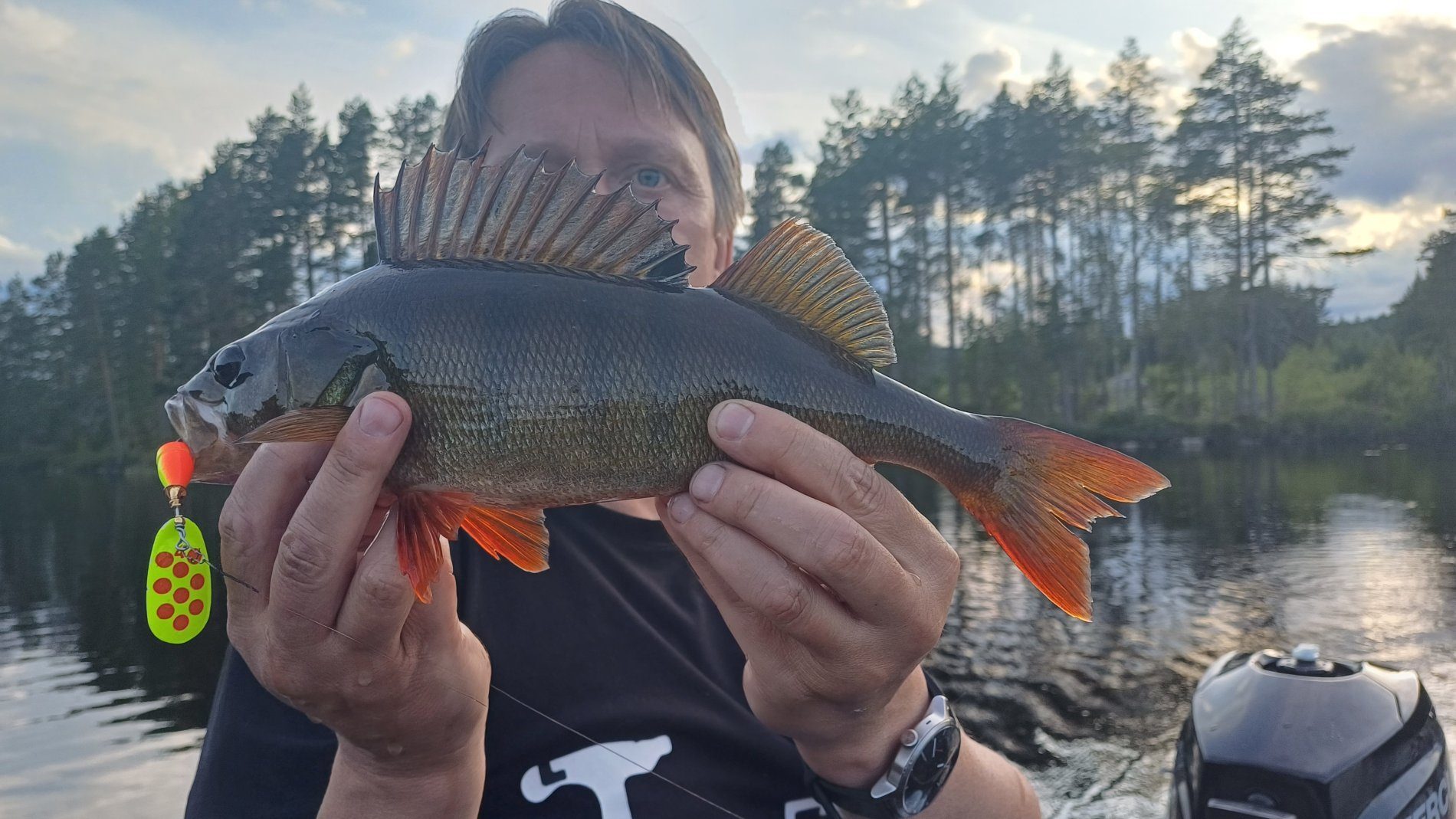
- Ingen - secret lake, few anglers, large perch
- Fryken - system of three lakes, stunning locations
- Glafsfjorden - part of Vänern, zander and salmon
- Värmeln - wild lake, requires motorboat
Best Time for Fishing
May-June: After spawning, pike feed actively. Water is still cold,
fish stay in shallow areas. Excellent time for trophies.
July-August: Peak season. All fish are active, especially perch and zander.
White nights allow fishing around the clock.
September-October: Autumn pike feeding frenzy. Large specimens come out
to hunt. Fewer tourists, more fish.
What You Can Catch in Värmland
- Pike: from 2 to 20 kg, regional record - 23 kg
- Perch: standard 300-800g, trophies up to 2.5 kg
- Zander: in large lakes, 2-8 kg
- Trout: in mountain lakes and rivers, up to 5 kg
- Grayling: in fast rivers, up to 1.5 kg
- Burbot: in winter, up to 4 kg
Secret Spots from Locals
Not all the best spots are marked on maps. For example, Lake Mangen - just 20 minutes
from Filipstad, but tourists don't know about it. Large pike and
rainbow trout live here. License only 100 SEK per day.
The Klarälven River - one of the last in Europe where you can catch wild salmon.
Best sections between Ekshärad and Hagfors. Special license required.
Practical Tips
- Bring a fish finder - lakes are deep, hard to find fish without one
- Best lures: Rapala wobblers, Mepps spinners, 10-15cm jigs
- In July-August, fish early morning (4-8) or late evening (20-24)
- Always get insurance - easy to get lost in the forest
- Bring insect repellent - mosquitoes are abundant in June
Conclusion: Värmland is the ideal place for fishing in Sweden.
The combination of accessibility, variety of waters, and trophy sizes makes
this region the best choice for both beginners and experienced anglers.
← Back to Articles
Zander Fishing in Sweden: Complete Guide
📅 August 2025 • 📖 15 min read • 👤 Alexander, professional guide
Zander is one of the most coveted trophies for anglers in Sweden. This predatory fish
is known for its wariness, delicious meat, and impressive size.
In Swedish lakes, zander reaches 10-12 kg, with record specimens exceeding 15 kg.
Where to Find Zander in Sweden
Best Lakes for Zander Fishing:
- Vänern: Largest lake, zander up to 12 kg, best spots near Karlstad
- Hjälmaren: Zander angler's mecca, shallow, plenty of 3-6 kg fish
- Mälaren: Near Stockholm, convenient access, zander 2-8 kg
- Bolmen: Southern Sweden, large zander, few anglers
- Åsnen: National park, pristine nature, zander 4-7 kg
Seasonality and Fishing Times
Spring (May-June): Post-spawn zander are hungry. They stay at 3-5m depth
near spawning grounds. Best time - evening twilight.
Summer (July-August): Zander move to 8-15m depth. Active at night and
early morning. Bite is weak in hot weather.
Autumn (September-October): Best time! Zander feed actively before winter.
Bite all day, especially in cloudy weather.
Winter (November-April): Ice fishing. Zander less active, but large
specimens are caught regularly.
Effective Fishing Methods
1. Jig Fishing (most productive method)
- Jig heads 15-30g depending on depth
- Soft lures 10-15cm (shads, grubs)
- Colors: chartreuse, white, orange for murky water; natural for clear
- Retrieve: step-by-step with 2-3 second pauses
2. Trolling
- Crankbaits 12-18cm with 4-8m diving depth
- Speed 2.5-3.5 km/h
- Best models: Rapala Super Shad Rap, Nils Master Invincible
3. Vertical Jigging
- Vertical spoons 60-100g
- Effective from boat over deep holes
- Works especially well in late autumn
Tackle for Zander
- Rod: 2.4-2.7m, 10-40g test, fast action
- Reel: 2500-3000 size, smooth operation, good drag
- Line: 0.12-0.16mm braided, essential!
- Leader: fluorocarbon 0.35-0.40mm, length 50-70cm
- Fish finder: critically important for locating fish
Search Tactics
Zander are schooling fish. Find one, and you'll find others. Look for:
- Drop-offs and ledges from 5 to 10-15 meters
- Rocky ridges and underwater humps
- Submerged trees and brush piles
- Entrances and exits from bays
- Bridges and dams with current
Secrets from Professionals
- During full moon, zander barely bite - plan your trip for new moon
- At water temperature 15-18°C, zander are most active
- Use attractants with fish or worm scent
- Keep quiet - zander are very cautious
- Change lures every 30 minutes if there are no bites
Records and Trophies
Swedish record - 18.1 kg, caught in Lake Vänern. Several dozen zander
weighing over 10 kg are caught annually. Our personal record - zander
8.7 kg, caught in October at Lake Hjälmaren.
Important: Sweden has restrictions on zander harvest.
Minimum size - 45cm, maximum - 75cm. Fish outside these sizes
must be released. Daily limit - 3 zander per person.
← Back to Articles
Fishing in the Far North of Sweden
📅 July 2025 • 📖 12 min read • 👤 Mikhail, Lapland guide
Swedish Lapland is the last frontier of wild nature in Europe. Here, above the Arctic
Circle, among endless tundra and mountain rivers, live fish that every true
angler dreams of - Arctic char, brown trout, grayling, and wild salmon.
Features of Northern Fishing
Fishing in northern Sweden is drastically different from fishing in central regions.
There's no infrastructure, few roads, harsh climate, but this is exactly what makes
northern fishing a true adventure.
What You Need to Know:
- In summer - midnight sun, you can fish 24 hours
- Mosquitoes and blackflies - serious problem in July
- Weather changes instantly - from +25 to +5 in an hour
- Mobile service only in larger villages
- Bears and wolverines - real danger
Best Fishing Locations
Torneälven River
Sweden's largest unregulated river. Baltic salmon weighing up to 30 kg live here.
Best sections between Jukkasjärvi and Pajala. Season: June-August.
Lake Torneträsk
Sweden's seventh largest lake, located in the mountains. Arctic char
up to 8 kg, brown trout up to 10 kg. Accessible only by train or helicopter.
Abisko National Park
Mountain lakes and rivers with crystal-clear water. Grayling, trout, char.
Stunning views, but requires lots of hiking.
Kalixälven River
One of Sweden's four national rivers. Wild salmon, brown trout, grayling.
Hard to access, but fishing is fantastic.
Target Fish Species
Arctic Char (Röding)
- Weight: 1-8 kg, records up to 12 kg
- Where: deep mountain lakes
- How: trolling at 20-40m depth, fly fishing at river mouths
- Lures: spoons, orange and pink streamers
Brown Trout (Öring)
- Weight: 2-10 kg, records up to 15 kg
- Where: large lakes and rivers
- How: spinning, fly fishing, trolling
- Lures: crankbaits 7-12cm, streamer flies
Grayling (Harr)
- Weight: 0.5-2 kg, records up to 3 kg
- Where: fast rivers and riffles
- How: fly fishing, ultralight
- Lures: dry flies, nymphs, small spinners
When to Go
June: Season start, few tourists, active bite after ice-out.
July: Peak season, white nights, all fish active, but many mosquitoes.
August: Best time! Fewer insects, stable weather, predator feeding frenzy.
September: Golden autumn, incredible scenery, large fish, but cold.
What to Bring
- Warm waterproof clothing (even in summer)
- Wading boots or chest waders
- Strong insect repellent (DEET 30%+)
- Mosquito head net
- GPS navigator and satellite phone
- First aid kit with antihistamines
- Flashlight (in case of fog)
- Thermos and high-calorie food
How to Get There
Main entry points: Kiruna (flight from Stockholm), Abisko (train),
Jokkmokk (bus). Then - car rental or helicopter. Many places
are accessible only on foot or by boat.
Costs
- Fishing license: 300-500 SEK/day
- Guide with boat: 3000-5000 SEK/day
- Helicopter: from 10000 SEK/hour
- Accommodation: from 500 SEK (hostel) to 2000 SEK (cottage)
Advice: Don't go north alone. It's dangerous and inefficient.
Better to hire a local guide or join an organized group.
We organize tours to the north 4 times a year - contact us for details.
← Back to Articles
Wild Salmon - Secrets of Successful Fishing
📅 June 2025 • 📖 8 min read • 👤 Andrey, boat captain
Baltic salmon is the king of Swedish waters. This majestic fish, reaching
weights of 25+ kg, is every angler's dream. After decades of population recovery,
today there is more salmon in the Baltic Sea than in the last 50 years.
Where and When to Catch Salmon
Sea Fishing (Trolling)
Best locations: Stockholm archipelago, waters near Nynäshamn,
Gotland, Gulf of Bothnia.
Season: April-May and September-November - peak activity.
In summer, salmon move to deeper water.
River Fishing
Rivers: Mörrumsån (best in Sweden), Emån, Ätran, Torneälven.
Season: June-September, peak in July-August during spawning run.
Trolling Technique
Equipment
- Rods: 2.4-3m, 20-50 lb test
- Reels: conventional with line counter
- Line: braided 0.20-0.25mm
- Downriggers or planers for depth control
- Fish finder with fish-finding function
Lures
- Crankbaits: 15-20cm, Rapala, Nils Master
- Spoons: flutter spoons 15-25cm
- Octopus and flashers: to attract attention
- Colors: blue-silver, green, orange UV
Tactics
- Trolling speed: 2.5-4 knots
- Depth: spring 5-15m, summer 15-30m, autumn 10-20m
- Use 4-6 rods at different depths
- Change speed and direction every 10-15 minutes
- Monitor water temperature: optimal 8-12°C
River Fishing
Spinning
- Rod: 2.7-3.3m, 15-50g test
- Spoons and crankbaits 10-15cm
- Retrieve: slow, against current
- Best spots: pools below rapids
Fly Fishing
- Rod: class 9-10, two-handed 13-15 feet
- Lines: sinking and intermediate
- Flies: tube flies 5-10cm, bright colors
- Technique: swing across current
Salmon Behavior
Salmon are pelagic fish, constantly moving. Morning and evening they rise
to the surface, during the day they go deep. They follow schools of herring and sprat.
Signs of Salmon Presence:
- Jumping out of water
- Surface splashes
- Gathering of gulls
- Schools of baitfish at surface
Regulations and Licenses
- Minimum size: 60cm (Baltic), 50cm (rivers)
- Closed season: September 15 - December 31 (rivers)
- Sea license: 100 SEK/year
← Back to Articles
Grayling Fishing in Sweden
📅 September 2026 • 📖 7 min read
You usually see the fin before the fish. A grayling turning in the current shows a purple-grey
dorsal sail far too big for its body, and once you have seen it you will never mix it up with a
trout again. Swedes call the fish harr. The Latin name, Thymallus, comes from
the faint smell of thyme a fresh fish is said to have. Hold one to your nose before you let it go
and decide for yourself.
Grayling want cold water with plenty of oxygen. There are lake populations, and in the far north
some even live in the brackish Gulf of Bothnia, but the fishing people travel for happens in
rivers: clean, fairly quick water over gravel and stones, often shared with brown trout. You will
not find them in the reedy pike bays of southern lakes. You have to go north, or at least up into
the forest rivers of Värmland and Dalarna.
Where to go
For a first trip we would point most people to the upper Klarälven around
Sysslebäck in northern Värmland. The local fishing association manages roughly 25 km of river
there and calls it one of the best grayling waters in central Sweden, which in our experience is
not an exaggeration. Most of it is slow and meandering, the kind of water where you can wade and
actually watch the fish rise. Not all of it, though. At Brattmon there are a couple of kilometres
of heavy rapids, so pick your stretch. A day permit cost 190 SEK when we checked this autumn.
Österdalälven in Dalarna, from Idre and Särna down towards Älvdalen, is the
other classic. Wilder, more varied, with flies-only stretches. We describe the Dalarna waters
in more detail on our Dalarna fishing page.
Then there is Lapland. The Kaitumälven near Gällivare, and the camp at
Tjuonajokk in particular, is the river Swedish fly anglers mention first when the talk turns to big
grayling. Getting there takes time and usually a helicopter ride. Worth it if grayling
are the whole point of the holiday. Overkill if you just want to try one.
When
Grayling spawn in spring, just after the ice goes, and most waters protect them while they do.
In Sysslebäck grayling fishing is closed from 1 January to 30 April. In Älvdalen most running
water is closed from 1 September to 30 April, except that fly fishing for grayling stays open in
Österdalälven until the end of December. In the far north the spring ban often runs into June.
We like late summer and autumn best. The fish have fed all season, the mosquitoes have given up,
and grayling keep taking small flies long after the trout have lost interest. On a calm September
evening on a slow bend of the Klarälven you can watch them rise one after another along the
bubble line. That alone is a good reason to come in autumn.
How to catch them
A grayling's mouth is small, soft and set low on the head. Most of what it eats drifts along the
bottom, but it rises readily to insects on the surface, so you fish either just above the stones
or right in the film. A 4- or 5-weight fly rod is plenty. Dry flies in sizes 14 to 18 when fish
are rising, small weighted nymphs when they are not. Lift gently when you get a take. A hard strike
tears the hook out of that soft mouth, and it happens to everyone the first afternoon.
With a spinning rod, go light: a small spinner or a tiny spoon of a few grams, fished across and
slightly downstream. It works, especially in coloured water. Still, fly fishing is the better
method for grayling, and on some stretches it is the only one allowed.
Rules that catch visitors out
Almost every grayling river in Sweden is run by a local fiskevårdsområde, and each one
sets its own rules. What confuses visitors most is the slot limit. Instead of a simple minimum
size you may keep only fish inside a size window, and the window shifts from river to river,
sometimes between stretches of the same river. Two examples from this season:
- Sysslebäck (Klarälven): keep fish of about 35–40 cm, at most three a day, plus one trophy over 45 cm.
- Österdalälven (Älvdalen): keep only 25–35 cm, and on some permits the window is narrower still, 25–30 cm. Larger and smaller fish go back.
So a 38 cm grayling can go in the pan in one valley and must be released in the next. Tributaries
often have windows of their own, and the rule for trout may differ from the rule for grayling in the
same water. Read what is printed on your permit, and buy the permit before you start, usually online
through iFiske. Our guide to fishing permits in Sweden
explains how the system works. We would also ask you to release more than the rules require.
Grayling grow slowly in cold water, and a big one has been in that river a long time.
Thinking of combining grayling with pike or perch on the same trip? Send us your dates through the
contact page or look through all our tours,
and we will suggest a route.